Georgian culture has developed around the language and its script throughout the country's history. They underpin a strong sense of national identity that helped Georgians preserve themselves through long periods of foreign rule.
Antiquity
The ancestors of today's Georgians were among the Caucasian peoples mentioned in Assyrian chronicles at the beginning of the first millennium BC. The folk epic Amiraniani also dates from deep antiquity. According to Georgian tradition, the script was created under King Parnavaz in the 3rd century BC. The anonymous chronicle The Life of King Parnavaz is devoted to him. Sakhioba, a traditional folk theatre that lasted until the 17th century, also has ancient roots.
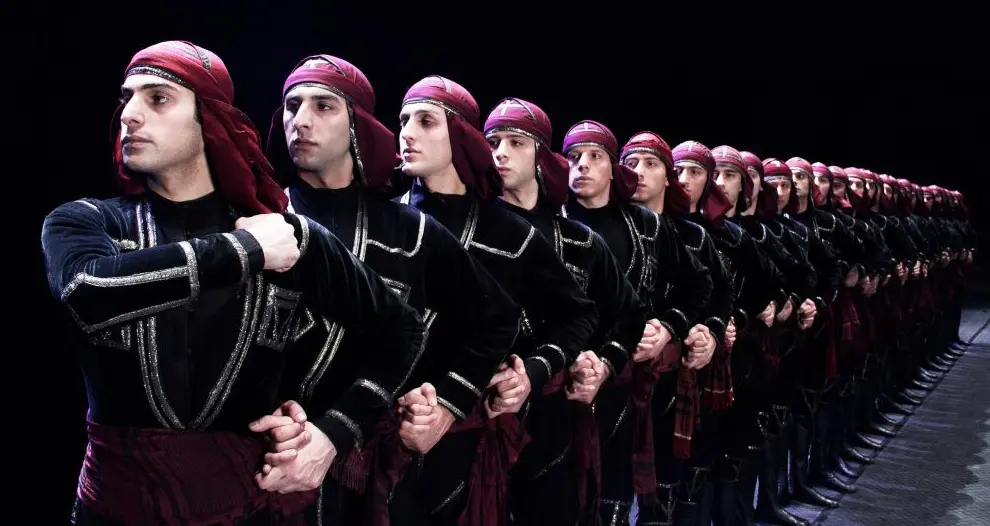
Middle Ages
Medieval Georgian culture was strongly shaped by Christianity, adopted as the state religion in the 4th century. The Georgian Orthodox Church supported and often funded the creation of books, icons and churches. Georgian churches and monasteries can be found not only in Georgia but also in Syria, Palestine and on Mount Athos. Bachkovo Monastery in Bulgaria was founded in 1083 by the Georgian Grigol Bakurianisdze, and Georgian monks lived there for about three centuries. Georgian icons and enamels are among the finest examples of medieval Orthodox art.
Well-known works of medieval Georgian literature include:
- The Martyrdom of the Holy Queen Shushanik by Iakob Tsurtaveli (5th century)
- The Martyrdom of Abo Tbileli by Ioane Sabanisdze (8th century)
- The Life of Grigol of Khandzta by Giorgi Merchule (10th century)
- The Lives of the Kings of Kartli by Leonti Mroveli (11th century)
- The History of the Bagrationi by Sumbat Davitis-dze (11th century)
- Tamariani by Chakhrukhadze (12th century)
- The Knight in the Panther's Skin, the epic poem by Shota Rustaveli (12th century)
- Abdulmesiani by Ioane Shavteli (13th century)
17th to 19th century
From the 17th century Georgian culture was increasingly influenced by Europe. The first book in Georgian was printed in Rome in 1629. The first printing press in Georgia itself was founded in Tbilisi in 1709 under King Vakhtang VI.
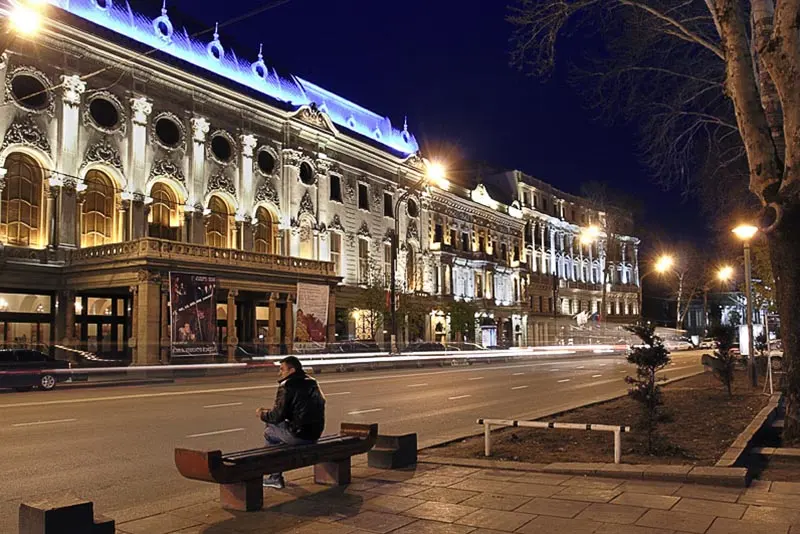
In 1791 the writer and diplomat Giorgi Avalishvili founded a Georgian national theatre in Tbilisi. The Tbilisi Opera Theatre opened in 1851.
The best-known Georgian writers of the 19th century include Nikoloz Baratashvili, Alexander Orbeliani, Vakhtang Orbeliani, Grigol Orbeliani, Dimitri Kipiani, Ilia Chavchavadze, Akaki Tsereteli, Alexander Kazbegi, Rapiel Eristavi, Mamia Gurieli and Iakob Gogebashvili, author of the primer Deda Ena.
20th and 21st century
The first film screening in Georgia took place in Tbilisi in 1896. The first Georgian documentary, Akaki Tsereteli's Journey to Racha-Lechkhumi, was shot in 1912 by Vasil Amashukeli. The first feature film, Kristine, was made by Alexandre Tsutsunava in 1916. Georgian cinema also won international recognition with the trilogy of director Tengiz Abuladze (1924–1994): The Plea (1968), The Wishing Tree (1977) and Repentance (1984).
UNESCO has inscribed Georgian polyphonic singing (2008), the ancient Georgian traditional qvevri wine-making method (2013) and the living culture of the three writing systems of the Georgian alphabet (2016) on its lists of intangible cultural heritage.
UNESCO: ich.unesco.org